Who's Afraid of Children's Books?

This essay was written for the print only periodical, THE APPROACH, in Fall of 2025 and has been republished here with their permission.

There’s a phrase book banners use a lot: Parent’s rights. They borrowed it from the anti-masker/anti-vaxxer crowd, and while the venn diagram of those demographics isn’t a perfect circle it’s close. Parents have rights—this is an argument you hear a lot from those who are proponents of book bans. That public institutions must yield their expertise and curation to the whims of said parental rights. And—despite the fact that it elides the erosion of other parent’s rights to allow their kids access to certain books—it’s proven to be an incredibly effective argument. Americans tend to agree that when it comes to a child’s education, parental rights is the trump card. 
With states like Utah and South Carolina banning specific books from the entire state school system in a single go, or Florida and Texas in a race to make classrooms as free of books as possible—or even California creating an infrastructure of gag orders around Palestinian curriculum with the hastily assembled and passed AB 715—it’s fair to wonder how we got to the place of such rampant censorship. The shortest answer is that dark money interests that are opposed to public education writ large, or that disagree with the separation of church and state, have used book bans around content that touches on culture war flashpoints (transgender people, for example, or frank recountings of American history) as a means to impose a Christo-fascist agenda, and defund public institutions of learning altogether. 

This is a correct answer, but it’s not a complete one. Central to all school book bans is the question of what is appropriate for children, and who gets to decide. Even  children’s publishing professionals contend with this question, one that is deeply subject to rapidly evolving social mores. On the one hand, representation of diversity has exploded in the last decade, an uncomplicated improvement for literacy in general. A major study by First Book Research and Initiatives revealed that children with access to diverse books spend more time reading, and have higher literacy scores—with a three point improvement on the national average. That states like Florida which leads the nation in book bans, also rank lowest in reading scores (Florida is 44th in the country) is not exactly a plot twist. 

On the other hand, we have also seen a downturn in major publishing houses taking on books that model anything other than good behavior in their protagonists, particularly in picture books. Main characters these days typically will do the right thing in the end. They will learn a lesson. They will change, and for the better. This is a tried and true story structure, and I do not mean to argue that it need be abandoned. Morality is taught. But a lack of new books with diverse perspectives–books allowed to be weird or dark or that decline to be morally instructive– is, I think, a mistake on several levels. 

This publishing framework does not allow these newly accepted diverse authors the chance to truly unfurl as artists, relegating us to didactic or historic texts about our marginalization, or our cuisine, or our holidays. These books are important and should exist, and also they are not the only stories were are capable of telling. It is a limiting model, and will also necessarily limit the joy the children who encounter these books will derive from them, and the joy the creators will take in making them. It ensures that our place on the shelf and in the annals of literary accomplishment will be restricted. It will also unwittingly send the message that to deserve space on the page, children of diverse backgrounds need to be obedient, reinforcing existing social demands- like those on Black children especially, to essentially not be children. 

It is worth noting that some creators are allowed this freedom, and they use it to incredible effect. Jon Klassen comes to mind; his recent early reader, The Skull, is the exact kind of book for which I am advocating. It is dark and weird and a little scary; Otilla is a brave protagonist but not one defined by her morality. It is also worth noting that the creators allowed this freedom tend to be, by no fault of their own, cisgender, heterosexual, white guys, who are allowed all manner of freedoms of speech that the rest of us are not.

Denying this freedom of expression to most creators also reduces the role of children’s literature to simply be morally instructive, or as a means to instill obedience. And this is where I believe that we as an industry—and parents inadvertently—play directly into the hands of book banners. 

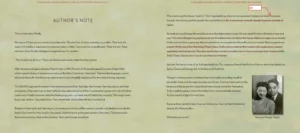
If children’s literature is not written to instill the love of art by exposure to complexity, nuance, questions that do not yield easy answers, and to liberate the mind, then we relegate ourselves to forever fighting to justify the point of each individual book on the ever-shifting ground of what is morally acceptable. This footing is precarious at best; to a right-leaning Evangelical parent, the inclusion of a single gay character in a story may destroy the work’s moral footing altogether. To a white nationalist, a book like my own Love in the Library (illustrated by Yas Imamura), which tells the true story of how my grandparents met in a Japanese American incarceration camp during World War II is categorically inappropriate because it ends with an author’s note about America’s history of state-sanctioned racism. These are impossible arguments to win when there is a fundamental disagreement on the terms of morality.

When we as parents or creators or industry professionals cede the argument that literature’s function is to reinforce a singular worldview, when we are discomfited by characters who do the wrong thing—Where the Wild Things Are by Maurice Sendak was famously banned for years for modeling poor behavior from a child; Max does not learn a lesson, he simply feels his feelings and moves on—or we are afraid of the darkness that lurks in pages, as in William Steig’s brilliant and upsetting The Amazing Bone, we find ourselves struggling to win a fight we’ve already surrendered. I don’t believe either of those books would be published today.

As a parent, I understand the inclination to inundate my children with positive role models. I would like them to be good. I would like them to be kind. I would like them to be obedient to me because that is what would be most convenient. Put on your shoes, for god’s sake. But that is not their job. Their job is to learn, often the hard way, and to tell me who they are. To ask questions only they can answer for themselves, and to struggle with complexity. It is not my job, as much as I would sometimes like it to be, to dictate how they think. That is something they have the opportunity to hone through life experience, and also, critically, through literature. 

I have heard it said that the first authoritarian our children will learn to overthrow are their parents. While the Right often uses a language of violence that unwittingly reveals a history of child abuse in their own lives—for example, Tucker Carlson promising an October 2024 Trump presidential campaign rally that when elected the candidate would give the country a “spanking” to riotous applause—even those on the Left struggle to think of their children as people, rather than as extensions of their parents. Often, the book ban argument devolves into “parent’s rights” on both sides, ignoring the existence of children’s rights. 

As the president of Authors Against Book Bans, a group of over five thousand book creators across the country united by this single issue, I have had countless meetings with other people fighting bans in this space, and have been told time and time again that children’s rights do not poll well. That it is a losing argument for this battle. It does not sway moderates, and even those who agree do not find that angle compelling. 

This to me reveals the fundamental sick at the heart of book bans– which is that both sides of this fight tend to agree that the role of children’s literature is to create and instill obedience, or not to exist at all. 

So, if you parents want to instill freedom of thought and expression in your child, read a weird or upsetting or advanced book with them. Don’t tell them how to feel about it. Let them tell you what they think, and don’t correct their interpretation. Remember that their mind is theirs to build, and there is no safer way to start testing the limits of their imagination than through literature. You have a responsibility to model tolerance through your actions, and that includes how you govern their media intake. 

Because if you want your kid to grow up into the kind of adult who doesn’t ban books? Then they can’t be scared of them. And neither can you. 

No One Is Coming: ALAN Award Acceptance Speech on Behalf of Authors Against Book Bans

Thank you ALAN and NCTE for recognizing Authors Against Book Bans for this award. On behalf of our national board, Samira Ahmed, Dhonielle Clayton, Gayle Forman, Alan Gratz, Joanna Ho, Kelly Jones, Adib Khorram, Maris Kriezman, David Levithan, Katherine Locke, Sarah MacLean, and Colleen AF Venable— as well as founding members without whom this group would not exist, Christina Soontornvat, Andrea Davis Pinkney and Sayantani DasGupta—  we are all so grateful and honored to be recognized.

We would also like to thank Tasslyn Magnussen of PEN America, Skip Dye of Penguin Random House, Mary Van Akin of Macmillan, John Chrastka of EveryLibrary, the Texas Freedom to Read Project and Florida Freedom to Read Project for lending us their expertise to help us on our way. 

Like many of you here, the members of AABB have been watching with rising alarm since 2020 as the scourge of book bans has gained traction among far right activists and dark moneyed interests, and also just like many of you, we kept looking for the leaders. Who would simply tell us what to do? What language to use that would arm us with the silver bullet we needed to finally condemn this nonsense to the annals of irrelevance where it belongs? Who was going to save us?

And, likely, just as many of you sitting here, we realized with dawning horror

No one was coming. 

More than anything I think one of the worst psychic wounds of this era is the revelation that those with their hands most comfortably seated on the levers of power seem the least willing to fight. We have watched high powered law firms, university presidents, and CEOs betray us with stunning speed. We have realized that they are not guarding our best interests. And that, somehow, it is up to us– normal, fallible, gullible, well-intentioned and overwhelmed people– to protect ourselves. 

The things we had taken for granted— the notion that literacy is a positive force.That teachers deserve respect. That learning is a net good. That honesty is virtue— are under siege. The task of protecting this nation from those attacks falls to regular people, unprepared for such a fight.

How were we caught so unaware? How did they get the drop on us so spectacularly, despite peddling such wildly unpopular ideas? How did all the grown-ups in the room, the politicians and pundits and executives we so trusted with our protection, leave us so magnificently vulnerable? 

It is an unmooring thing, to realize that you are unsafe in the place you call home. And for so many of us, that place, that home that is most dear, is not a spot on a map, but a sentence on a page. We have sought refuge and solidarity and hope and comfort in books for centuries. And now our home, the home we have all worked so hard for generations to build, it’s on fire. 

And nothing burns like a book. 

I have personally indulged, more often than I would care to admit, in hopelessness. It’s hard not to, every time a new Supreme Court ruling deems some fresh atrocity legal, or every time a new executive order seeks to dehumanize whole swaths of our community with a single pen stroke. It is easy to focus on how much power we do not have. 

But the flip side of the regular people being abandoned by the institutions we hoped would protect us is… well. We are all the regular people. We are now charged to keep us safe. And I may not trust systems, but life has taught me to trust people, and book people most especially. Because if I could choose who to fight alongside, I would choose the people who have spent their whole lives developing empathy, approached the world with curiosity, and educated themselves. I would choose to fight alongside readers

We are staring down the very real possibility that democracy itself in this nation could come to an end. Despots throughout history have known that their most formidable enemies were educators and artists—so now it is no surprise that the people who teach books, and the creators who make them are among those under attack. We stand in opposition to the single story every authoritarian must tell in order to consolidate power:

That he alone can save us. 

Hopelessness will try to convince us that he is right. That we are powerless, and that he is all powerful, and there’s nothing that can be done to correct it. But the truth is he can’t do either– he alone cannot save us. And he alone cannot destroy us. And though we are certainly living through an era where ONE guy is sure doing his best to destroy so much of what all of us in this room have given our lives to build, he is destined to fail. He’s peddling a lie that never holds. And readers know that. We know that. 

 By the same token, no one person can ensure he fails. No ONE person. 

 And so it is incumbent upon us to be the regular people, the fallible but the many, the most of us who stand in the way.Regular people, each and every single one of us, have power. The power to remind each other what truth sounds like. To show each other that there is not just the will to fight, but the imperative to do so. That hope is a warrior emotion, one not born of optimism, but of the refusal to be step aside, the refusal to cede what we each know is sacred.

Literature is under attack. Our home is under attack. Those who are attacking the right to read are doing so under the guise of protecting children, but we know this is a disgusting lie. No child is safe in a classroom stripped of its books when someone with an unregulated AR 15 comes to school. They do not want safe children -- they want obedient children, and they think they can accomplish that by deciding what books are allowed to be on the shelf.

But we know that the function of literature is not to instill obedience, and we know that the question is no longer what books are allowed on the shelf -- but are we allowed to have books at all. Because just as there is no child we can sacrifice to keep other children safe, there is no book we can sacrifice to keep other books safe. 

The function of literature is to ask questions we don’t know the answers to; to have the wild and wonderful horrible world laid bare before us; to see ourselves, to see each other; and to broaden our minds past the confines of the geography we were born to. Literature is freedom. And we should be very hostile indeed to those who seek to stifle it.

As GK Chesterton said: “Fairy tales do not tell children that dragons exist. Children already know that dragons exist. Fairy tales tell children that dragons can be killed.” For so long we have peddled in tales of courage, and kindness, and resilience. All that time in the library, in the stacks and on the page spent preparing ourselves for this moment.The time has come for us to live by those values. To be the hero on the page we so admired, and wondered, could I be brave enough to fight the dragon?

Because the truth is no one should face the dragon alone. Alone, we are easily picked off, terrorized, silenced, and cowed. But together? Together we are something bigger than a dragon.

The great strength, the thing I am most proud of within Authors Against Book Bans is that none of us taking this on alone. Countless volunteers have stepped in, to make a poster, edit a video, speak at a school board meeting, write a letter to a legislator, or even to their own publishers. State leaders have been working tirelessly to pass proactive legislation to protect our freedom to read, and to stand in the way of bills that seek to criminalize us. Even this speech was edited by AABB member Sarah Gailey. Our members have decided that this fight is ours. 

This is your fight, too. You don’t need an invitation. You can start right away. We need each and every one of us to take ownership of this nation because it is OURS. It belongs to US, Black and Indigenous people of color, queer folks, our trans siblings who have always been with us and always WILL be with us, Muslims and Jews, immigrants, scientists and journalists, teachers and librarians and book creators and readers. We will not be erased. We will not be silenced.

When you join the fight, you’ll be joining so many incredible people, our arms linked around the home that we all built.

And that’s our promise, from Authors Against Book Bans, to each and every one of you in this room. We may not have as much time or power or money as we would like. We can't be everywhere at once, even if we'd like to be. But we’ll be goddamned if we let any of you fight alone. There are more of us than there are of them. This is our country. This is our fight to win. 

No one is coming to save us, but that’s ok. 

WE are going to save us. 

Thank you.

A Love Letter to East Bay Booksellers (But All Indies, Really)

I wrote this for a fundraiser for East Bay Booksellers that happened shortly after their store burned down in a fire. And while it’s very much about that store, it’s about indies in general, of which I am a forever supporter. Happy Independent Bookstore Day to us all, except Jeff Bezos.

Of Pigeons and Bookstores

I heard that we never see baby pigeons because pigeon parents nurse their offspring until they’re fully grown. I think at some point I substantiated it with a cursory google search, but it could be apocryphal. I haven’t really put my best efforts into proving it or not because it’s the kind of thing I like to believe. And what harm is there really, in me believing in loving pigeon parents, doting on adolescent teen pigeons until they’re ready to meet the world as their adult self? Sometimes I just need something nice to believe in. 

Here’s what I know about pigeons for sure: they are wherever we are. Pigeons exist on every continent except Antarctica, and to be fair there is no population of humans indigenous to Antarctica either. Their populations swell where our populations swell, and we curse them as they crowd our cities, scraping a living from the leavings of civilization. We urge people not to feed them, but inevitably some soft-hearted someone always does. They are sometimes vectors for infectious diseases. We build all manner of anti-pigeon technology, erect spikes along our buildings so they cannot perch there and poop prodigiously all over the human industry of which we are so proud.

And yet— if there is a single space between the spikes, a pigeon will settle there. Maybe out of spite. Maybe out of necessity. Or maybe just because pigeons live by a strict if it fits I sits lifestyle. 

I cannot claim to know the mind of a pigeon. 

But I can claim to have never seen one pigeon that looked exactly like another. That some boast a ring of iridescent feathers around their neck, and others may be speckled, and yet others still who are nearly all white, or all black, or all gray. I have seen lots of pigeons who are missing a foot. More still who look as though they flew directly threw a tornado of trash before pecking for crumbs on the sidewalk we share. 

I also know I find large flocks of them unnerving, just as I find large crowds of humans unnerving. And that once, while walking down Haight Street in San Francisco, in a fit of over confident frivolity, I tried to scare a pigeon by lunging at it, which provoked it to lunge back at me, its wingbeats suddenly cacophonous and frankly terrifying in my face. I was the one who backed down, not the pigeon, and I’d be lying if I didn’t admit that ever since then I have treated the entire species with markedly more respect. 

I think what I like best about pigeons is that I feel they are the species of animals that humans deserve. Often, people will appropriate the term spirit animal, and that’s not what I mean here. When I say they’re the animal we deserve, I mean they’re the animal we should see, as a species, when we look into the mirror. They are our soul twins, for better and for worse. Pigeons and humans have co-evolved to share our space and our filth, and to be unsettlingly populous on a planet that could do with less of both of us. Pigeons reflect back at us the grime and muck that we have created and I think we unfairly resent them for that. They wear our pollution without shame or self-consciousness and I think we begrudge them for that, too. As if we were better than that, knowing all the while that we are not even as we kick our shoes off at the door.

All this, and yet these are still the birds who nurse their young until they are fully grown. All this gunge and grotesquery and yet they still yield such tenderness. I look at each fully grown pigeon I see eating directly from a dumpster and remind myself that not long ago that pigeon’s parents nursed it until it was comically grown bird in a very lazy nest—

—this is a side note, but have you ever seen a pigeon’s nest? They put zero effort into construction, it is often a literal bunch of sticks on the ground, like someone had thrown them there in a fit of annoyance and simply never asked themself if they could do better, I adore them—

—anyway, a comically grown bird in a very lazy nest until, one day, it’s finally ready to put wings to flight and leave. I wonder sometimes, is it a binary choice? Are they there and then gone? Or do they sometimes return to the place where they were tended, nostalgic for an easier time? Maybe it depends on the bird. I know it depends on the person. 

If it is not clear, I love pigeons. I love them for their filth and their care. I love them just like I love people. With a sense that perhaps we are something better than the sum total of our actions, but probably not. I love them for highlighting for me the great contradiction of humanity, too: that we are capable of such incredible destruction and cruelty. But also that we are capable of staggering imagination and creation. That one will always coexist with the other. That no matter our accomplishment, we will never be so far from the tender animal inside of us that just wants to sit where we fit, and be loved. 

When I feel particularly pessimistic about humans, I try to remember the pigeons of it all. I try to think about what we do that is equal to the cosmic imbalance in favor of the suffering we cause. And when I find myself in that state of mind, which is often, I walk to my bookstore, my local, East Bay Booksellers. It’s just a couple blocks from my home. And I immediately visit the staff pick wall. 

As an author I am keenly aware that every book is somebody’s precious something. An idea nurtured until it was fully grown, into something that anyone else might be interested in. I am also keenly aware that there are more books than I will ever read, and that in turn the books I write will not be read by most people. 

But when I visit that staff pick shelf, I am reminded of the tenderness of humans, and our great potential. That in books we mark ourselves as creatures of creation, but not only that, social animals bent on sharing our most intimate and meaningful experiences with others. We experience worlds as complex and harrowing and heartbreaking and beautiful as the one we share with pigeons, completely within our own minds and NOT ONLY that, but then we also build shrines to those narratives, and within those shrines we erect pedestals. 

A bookstore represents acts of love and worship and care in layer after layer. And a bookstore like East Bay Booksellers is the kind of store that does this best. That revels in the particular taste of each of its booksellers, makes space for them to lift the work that matters to them most for others to see and appreciate and support. I know an Adelaide pick from a Brad pick from a Thu pick from an Elizabeth pick. I recognize their handwriting, and have some small sense of each of their minds, in the exact manner in which each of them cared to share it. I am invited to this space even when I am cranky or gassy or unpleasant, to be immersed in endless rings of individualist wonder.

And if that is not worth saving, then I do not know what is.

An Open Letter to My Fellow Book Creators

Inside me there are two wolves: the one that understands that the best activism happens behind closed doors and that everyone does what they can and that not everyone can be asked to do the same things, and that we need to trust others to fight for what we do not know how to fight for, and to respect that people are afraid right now. 

And the one that is fucking sick of watching people wring their hands and not do shit. And RIP to that first wolf, because the second has torn out its jugular.

We live under authoritarianism now. 

That’s the fact. People are being disappeared off the streets and sent to detention centers and mega prisons in El Salvador without due process. Our media has surrendered the fight for fear of litigation or for fear of appearing “unbalanced.” Our institutions are crumbling under the pressure. Our leaders are too entrenched in the dark money politics that allowed this situation to arise in the first place in order to enact any meaningful change that could push back with as much violence as we are being pushed with, not to mention the genocide they were at best complicit in and at worst actively fueling. 

We are adrift. We are trying. We are not trying hard enough. 

I am specifically thinking of the book people in this moment. The authors and illustrators and creators and publishers and publishing professionals. We are in the business of making art. We cannot peacefully exist without protections of free speech. We say we are in this line of work because we love it, because we believe in it, because we know that art is essential. But the time has come for us to protect it. And where are we? 

This is not to yell at the people I know are already deeply entrenched in fights, from WAWOG to AABB, to litigation to community organizing. There are heroes out there. A handful who are fighting, and fighting with our whole chests to protect some corner of the world, be it Palestine or the library. But by and large, the majority of us are silent. Complicit. Cowardly. Small. 

People with overwhelming commercial success that could be leveraged in powerful ways right now, to mobilize large swaths of America that the rest of us cannot reach. People high up in publishing who are still under the impression that following the letter of the law, even as new wildly unconstitutional and frankly unjust executive orders rain down upon us, will keep their businesses and employees safe. New hires that are too afraid to call out the inanity of what they’re seeing. Editors who say they stand with their authors, but are silent as we are attacked, silenced, and intimidated. Authors who write about bravery, but don’t demonstrate any themselves. 

I am weary of you. And I am unable to muster the energy and generosity and kindness that will be required to call you in. All I have left is the furnace of my fury, and I’d say I’m sorry but that’d be a lie. I’m not sorry anymore. I have exhausted my good will making excuses for those around me. I am no longer interested in the theater of propriety when Rümeysa Öztürk—an aspiring children’s book author, one of us— is being denied her asthma medication in detention after being snatched off the streets for co-writing an OpEd in a school newspaper. I cannot find a fuck to give about politesse while Elon Musk plunders our government. I do not have due patience while due process is denied. There’s no more patience. Patience is a privilege we enjoyed, too long and too well. And now we’re here.

Either you find your friends and your allies and you link arms with them around some little corner of this country that you love: the library, or public health, or your trans friends, or your immigrant friends, or public lands, or the fucking planet— take your pick EVERYTHING is under attack right now— and you fucking protect it. You do this nonviolently NOW, because we may not have that privilege in the future, either.

You don’t have to invent the wheel. Join groups that exist. Follow their lead. Respect that other activists are working just as hard as you are, and don’t waste your time critiquing how they fight their fight, but steal their practices when you see them. You don’t need to like what they’re doing but you do need to stay out of their way. Accept that you are likely not a leader in this moment; that you are not Katniss Everdeen. Remember that in order for her to do what she did, countless nameless thankless people had to make decisions up and down the chain of power that required risk. No one will thank you for what you do. Maybe no one will ever know about it. You will get no prize. You will have to take risks anyway.

But remember: you are an artist. So you should already be practiced at taking risks.

We have peddled stories of bravery and risk and sacrifice and courage in relative safety now for decades. The time has come for us to enact those same principles in our lives. I cannot hold your hand through this, but I can promise to link my arm through yours and stand beside you. But only if you’re willing to stand.

Now is the time. Pick your fight.

2024 Minidoka Pilgrimage Keynote

I was honored to be asked to give the keynote address at the Minidoka Pilgrimage this year. Over 200 descendants and survivors come from all over the country to visit and discuss what the incarceration means to us. The keynote is meant to set the tone for the weekend. This is that speech.

I’d like to thank my mother, who is here with me today. It was not until I became a parent that I understood the gravity and magnitude of the task of raising a child with honesty. I see now that it is a daily discipline, a source of exhaustion, and a monumental undertaking. I took it for granted as a kid because my mom just… told the truth. Even when the truth was devastating. I know now how tempting it is, to shield our babies from anything that could hurt them. I know now how deeply a parent loves their children, that we would do anything to keep them safe from hurt and strife and fear. But her discipline has imbued in me the bedrock belief that we all deserve the truth. That honesty is integral to any education worth having. And that the courage to wield the truth with compassion and clarity is perhaps my own highest calling. Thank you, Mom. 

It is thanks to her hard line on truth that I wrote my book, Love in the Library, which takes place in Minidoka. Of all my work, that book has had the most impact on my life, as an author and as an activist. It is the true story of how my mother’s parents met in Minidoka.

Tama was a writer herself, and a talented one. But the racism toward Japanese Americans was such that she was never able to secure a publishing deal. That is why it was essential to me to end the book with her words: “The miracle is in us, as long as we believe in beauty, in change, in hope.” With the privilege and good fortune I now exercise, her words have, at long last, seen print in a book. And that makes me so proud. 

I was honored to come to Minidoka, as a guest of Friends of Minidoka and the Idaho Librarian Association in early October of last year. In the airport, on the flight home, news came out of Israel of a horrendous attack. And even then I knew what would follow would only yield new horrors. I knew it as a Jew. And I knew it as a descendent of Minidoka survivors; that the single most perilous time for all nations comes in the wake of shocking violence. 

The assassination of a German politician by a Jewish student was the justification for Kristallnacht, the first night that portended all the violence that was to come. The attack on Pearl Harbor, which saw our families put into a prison camp, still commemorated with little mention of the follow on acts of violence our government committed against its own people. We saw it in my own lifetime, after the attacks on the World Trade Center and the Pentagon on September 11th, which gave way to endless, ruinous wars all across the middle east, not to mention the establishment of a mass surveillance state that we still live under. 

I scrolled my phone on October 7th as the death count swelled. As Israeli flags were posted across many of my own family member’s accounts. And I braced myself for the violence that was to come. But nothing could have prepared me for what we’ve seen.

When I wrote Love in the Library, I did not start with a mention of Pearl Harbor. I made this choice on purpose. Leading with the state line of justification for the deep injustice that followed is a mistake with several insidious repercussions. To start, a justification for the unjustifiable will always minimize the cruelty, absurdity, and violence of the reaction. It will also minimize the pain of survivors — sure you were uncomfortable, but what was the US supposed to do, not defend itself? — and treat their lives as acceptable collateral damage. 

It will also occlude the climate of injustice and racism that preceded it. As if Japanese Americans had been whole-heartedly embraced by the American community until our ancestral nation attacked the Pearl Harbor; as if Palestinians had been treated equitably and justly by the Israeli government until the attack on October 7th; as if Jews posed a unique threat to the German people, and were hell bent on destroying that nation through crooked dealings and manipulation. 

These lies can only survive in a climate in which the truth is suppressed. 

It is no coincidence that in all three of these cultures— pre-WWII Germany, WWII America and contemporary Israel— stories that may beg to differ were and are violently suppressed. Japanese Americans who fought against incarceration were imprisoned, their voices subsequently erased from our history books. Even as a Japanese American I was not taught about the No-No boys until my adulthood. Nazi Germany simply burned the books that would threaten their Führer’s vision for the future. And in Israel, peace protestors are increasingly intimidated, fired from their jobs, and arrested for speaking out. In the United States, protestors with the same goal of peace are slandered as antisemites, even when thousands of us are Jews ourselves.

Injustice thrives in disinformation. 

Disinformation is, of course, the defining characteristic of our time. From a convicted felon who dubbed all bad press about him as Fake News. To the rising culture of book bans that have swept our nation, and particularly in this state, in Idaho, where hb 710 has made libraries all financially liable for any complaint ANYONE makes about ANY book they find there for being “inappropriate.” 

With Project 2025 looming over our nation on the fascist candidate’s ticket, we could see the dissolution of the Department of Education, which will only accelerate the dissemination of disinformation and the exclusion truth. Already books about Japanese incarceration are banned— my own book included. If we lose this upcoming election, it is not a stretch to believe that telling our stories at all could become illegal. This is by design— Project 2025 seeks to harden hegemony and hegemony requires the erasure of stories like ours. 

In the United States, the fight against book bans has changed dramatically since Banned Books Week was started by the American Library Association in 1982. Book bans have always ebbed and flowed along with moral panics in the United States. But gone are the comparatively quaint days of banning Scary Stories to Tell in the Dark for being too, you guessed it, scary.

Now, bans don’t just seek to pull purportedly “offensive” content from the shelves. It’s to defund the shelves they sit on, in any institution of public learning that is funded enough to have shelves. The dark money, far-right extremists that favor bans have learned to capitalize on easily inflamed bigotries against LGBTQ+ and BIPOC creators who have only just been allowed entrance to the literary world. But, perhaps most infuriatingly of all, this has been accomplished through a contagious and pernicious lie: that there is pornography in the kids’ section. And that teachers and librarians are pedophiles, bent on grooming our children for sexual abuse. 

A horrifying prospect! If it were true. 

It’s not. But that doesn’t seem to matter. That these are life-ruining accusations has not slowed down anyone bent on banning books. Nationwide our fellow citizens spring up, deputized by their fear and resentment, and lob these bombs onto educators just doing their jobs. It’s a neat bit of psychological warfare. Because as soon as you have to say: “I’m not a pedophile!” you sound, unfortunately, just like a pedophile. And so institutions scramble to respond, wasting massive amounts of time and energy in institutions already short on funding and staff, fear spreads, and whole communities of educators are brought to heel and quietly start to censor themselves. 

The argument is of course that they are just protecting the children. That’s why Huntington Beach, California’s public library is having every single one of their children’s books– from board books to young adult– relocated out of the children’s section until they are audited for pornography. That’s why the public library in Donnelly, Idaho is “adults only” as of this last Monday. That’s why, apparently, it could soon be illegal to be a member of the American Librarian Association in Louisiana. To protect the children? 

This is a lie, too. No child is safe in a classroom stripped of its books when someone with an unregulated AR-15 comes to school. Nevermind that pornography is easily sought on the internet, with just a couple key words, and that most children spend more time with their devices than they do in the public library. Ignore the very real accusations of grooming that come from various religious organizations. 

Because this was never about the children.

That Black and LGBTQ books are so often the target of these bans should be no surprise. The framework for doing bodily harm against these groups is already in place. Police kill people from these groups with near impunity, and even citizens seem to have been deputized, as George Zimmerman’s exoneration proved, as the canonization of Kyle Rittenhouse on the far right has proved, and as the treatment of the man who murdered Jordan Neely proves.

And so it is a perilous time to be in our nation. I have been told we are witnessing the death rattle of a violent minority. But I believe that we are witnessing the rise of a uniquely American fascism. I hope I am wrong, but with all the recent decisions from the Supreme Court just this week, I doubt it. 

If you wondered what major publishers are doing during this perilous time I have some bad news. Likely if you’ve heard of me before you are either facebook friends with my mother, or because of the story I’m about to tell you. 

You’ve seen this logo before. Maybe you know Scholastic well from their book fairs or their book clubs. Probably your kids’ school has a direct relationship with them. They’re unique that way among big publishers because they go directly into schools. Their reputation among educators is powerful. 

And a year ago, their Education Division offered me a deal. They wanted to license this book, LOVE IN THE LIBRARY. They wanted to repackage it, and bring it into all those schools they work with. Which is an incredible opportunity.

But only if I made an edit. My offer was contingent upon it. A whole paragraph about how what happened to my grandparents was not an isolated incident. How it’s part of a tradition. 

But not only that: the word RACISM would be removed from the author’s note altogether. 

I said no. Absolutely not. And I said so publicly. 

I knew that saying no was passing on a strong opportunity to better poise this little book that I love and believe in so much for greater success. I wrote LOVE IN THE LIBRARY so it would be used in classrooms. Scholastic could make that happen for me. But the deal was too toxic to accept. Unwittingly or not, Scholastic was participating in the white supremacist tradition of using Asian stories as means to cast us as the model minority. Sure, Japanese Americans were interned back then, but look at them now! This drives a wedge between us and other marginalized groups. It divides us. And as the old adage goes, divided we fall.

Scholastic wanted me to occlude the truth of my grandparent’s story so that they could court the very same readers who have banned my book for being “Un-American.” They were more invested in reaching a small corner of the market than they were in preserving the most essential truth of their story. And this story is typical in traditional publishing. They are not unique in this tact. 

We must be realistic. Capitalism will not save us. Our institutions are not proving up to the task of withstanding far right infiltration and destruction. Only our collective action opens the door of possibility for a better future. Only our commitment to truth and justice. 

As the genocide in Palestine rages on, I wonder what offers have been made to Palestinian authors, if any offers have been made at all. There are a grand total of 4 traditionally published children’s books from major publishers about the Palestinian experience for the American market. By contrast, there are more than 30 books about Japanese American incarceration. We have a relative privilege. Our history of marginalization happened long enough ago that some white people will let us speak to it. That it took 80 years to reap this slim gain is a shame. However, it is our obligation to use that privilege all the same. Not just for our ancestors and families who deserve to have their experience honored, but for those whose stories bear tragic resemblance to our own, so that they can know that they are not alone. 

That we stand with them. 

If we had been presented with a wide array of Palestinian stories, told by Palestinian people, what would national opinion about the currently unfolding genocide look like? We don’t know, because those stories have been suppressed. And we, as the descendants and survivors of Minidoka know what it means to have our stories suppressed. To live in fear of our own voices. To feel obligated to sand down the sharp edges of our truths so we might even be invited to the table. 

But remember: 

Our grief humanizes us. 

Our anger is galvanizing. 

And our solidarity is more dangerous than any gun.

When we tell our stories with honesty and clarity, when we make the connections that desperately need to be made to other marginalized groups, we plant the seeds for change. It is our obligation, our responsibility, our duty as the keepers of these memories to ensure that they are not siloed away into sanitized capsules, unable to commingle with like narratives. 

When I visited Minidoka last year it was the first time I had ever had a chance to visit. I was given a tour and videotaped as they walked me around and I tried my best to understand something so unfathomable. I came away freshly dedicated to telling my grandparents’ story. 

I wondered what sites would some day be likewise preserved to ensure the commemoration of other brutal histories. If one day there would be a walking tour of the cages where immigrants on our southern border were held, punished for the dream of being American. If some day I would walk through the ruins of Khan Younis in Gaza, as a guide pointed out to me mass grave sites. But I wonder and I fret if we will ever be allowed to tell those stories at all as they deserve to be told— in 80 years, or ever.

We are all connected. Our liberation entwined. There is no Japanese American equality without Palestinian equality. There is no justice for the Holocaust without justice for the Nakba. No reparations for the descendants of the enslaved without land back for the first nations. There is no pride in genocide. Any injustice anywhere is a threat to justice everywhere. 

The time for quiet distaste and disapproval has come and gone. To meditate on the truth of marginalization is to be called into action. Anything less than that only reveals a lack of true comprehension.

About a month ago, I took my son to an ice cream shop. He’s four. It was a big deal. He got a sundae. It was a perfect afternoon, the kind that just reinforces the great joy of being a parent, the endless delight of a child’s smile. I took a picture of him and like many insufferable millennials, I went to post that picture on instagram. 

When I opened the app on my phone, I was immediately confronted with a video from Rafah— the city farthest to the south in the Gaza strip, where Palestinians were ordered to go by the Israeli military— the video was of a man, frantic, running through debris and flames with the body of a decapitated child. I looked away. I had to. But I have spent every day since October in the same state of numb horror that I think a lot of us are perpetually in, mourning for a child whose name I did not know, who was still my child all the same. A child who deserved everything my son has. To wear a silly hat, and to have a sweet with someone who loves them for exactly who they are. 

All children deserve this. As James Baldwin said: “The children are always ours, all across the globe, every single one. And I am beginning to think that those who do not understand this are incapable of morality.”

That boy’s name was Ahmad Al-Najjar. He was 18 months old, the same age as my daughter. His brothers who survived saw what happened to him. They wept as they described the scene to an AJ+ journalist, just babies themselves. Their mother had been killed in a previous airstrike. Ahmad spent his last day playing soccer with his brothers. He called his father “potato.” He had a beautiful smile, and full toddler cheeks. He is survived by his father, and two brothers. Ahmad did not live the life he deserved. But at the very least, he deserves to have his story told. He deserves to be remembered.

I stand for Ahmad Al-Najjar not just because he is a child, though honestly that would have been enough. I stand for him because I understand as a Jew what it means to be dehumanized on the global stage by those who would see you dead. I stand for him because as a descendent of Minidoka, I understand what it means to be punished for the act of a government you had no control over. I stand for him because I have learned enough to know that great injustice relies on people like me failing to make those kinds of connections. 

Ahmad was my child. And he was yours, too. 

In Timothy Snyder’s excellent book ON TYRANNY, he details the steps all regular people must take to resist totalitarian regimes. 

Step one is not to comply in advance—which is what Scholastic did. They bent to fascistic demands before they were even made in the hopes of selling more books. Just one more reason I could not accept their offer. I will not comply in advance. 

Step two is to choose an institution— the free press, voting rights, intellectual freedom— and to defend it. 

This is why I stand against book bans. Because the essential connections between historically marginalized groups are most easily forged through narrative. If we each only fight for ourselves and our own, narrow communities we are easily divided and conquered. When we fail to recognize the humanity in others that we have been deprived of, we only compound the trauma of our pain because we force ourselves to suffer it alone. 

Book bans are small potatoes compared to genocide. But I think of the book burnings in Nazi Germany. I think of the intellectuals and artists who fled once their work was demonized. The suppression of history, of the stories of the oppressed, of free expression is one essential piece of the permissions structures that enable a genocide to happen.

I will never forget Ahmad. And even if it feels impotent to keep calling and emailing my state representatives who are either unable or unwilling to affect any change I keep doing it. I keep marching. I keep donating. I keep fighting. I keep writing. Because some day my kids will ask me what I did in this time while our rights were being dissolved, our books pulled from the shelves and our money used to make the bombs that killed Ahmad Al-Najjar. And your descendants will ask you, too. 

I hope you will feel satisfied with your answer. 

I know I won’t feel satisfied with mine.

To tell stories like Ahmad’s story is a responsibility. To hold the stories of our families is a responsibility. Not just to share their stories, but to do so without flinching. Their stories hold devastating truths about our world. But when we insist upon not only telling those stories, but telling them in their fullness, in all their terrible specificity and honesty, we not only honor them–

 We create the framework for protecting those like them. We do the arduous and sometimes impossible work of humanizing them in the eyes of those who viewed them with indifference or even hostility. We force bigotry to answer for itself. 

This is difficult work. Emotionally exhausting. Intellectually frustrating. Existentially crushing. There’s no way around that. But we know what the alternative is. And it is unacceptable. 

We cannot be solely focused on our own suffering. We cannot afford this. The world cannot afford this. 

Again, it is only right to end with the my grandmother’s words, words she wrote while being victimized by this nation we all call home:

“The miracle is in us. As long as we believe in beauty. in change. In hope.”

Scholastic, and a Faustian Bargain

Recently, I got an email with an offer from Scholastic’s Educational Division to license Love in the Library for an AANHPI narratives collection, I was thrilled. If you’ve been in kids’ books for more than ten minutes then you are aware of the staggering reach of Scholastic. And since I’m not published by Scholastic this seemed like  a thrilling opportunity. But as soon as I cleared the opening paragraph, my heart sank. 

I’ve been really proud of Love in the Library’s successes. Yas Imamura’s illustrations are incredible. My publicist, Jamie Tan, of Candlewick did her job with sensitivity and respect. Our editor, Karen Lotz, helped shape the book into its best form while never demanding the story be told in a way she deemed might be more palatable. There were starred reviews, Best of 2022 lists, personal letters from people whose families had been incarcerated to whom this story means so much. 

It is also true that I wish it sold more copies than it has. It’s a story I believe in, deeply, and a story that I think merits exposure– something Scholastic uniquely offers.

And Scholastic wanted to license the book! But only with a change to the author’s note. My offer was contingent upon it. Without even looking I knew what it was going to be. It was going to be the paragraph that inspires 1 star reviews from angry patriots, the one that sends them to my inbox with words unfit to repeat here or anywhere. And sure enough that was exactly what they wanted to remove. 

But not only that: the word RACISM would be removed from the author’s note altogether. 

They wanted to take this book and repackage it so that it was just a simple love story. Nothing more. Not anything that might offend those book banners in what they called this “politically sensitive” moment. The irony of curating a collection tentatively titled Rising Voices: Amplifying AANHPI Narratives with one hand while demanding that I strangle my own voice with the other was, to me, the perfect encapsulation of what publishing, our dubious white ally, does so often to marginalized creators. They want the credibility of our identities, want to market our biographies. They want to sell our suffering, smoothed down and made palatable to the white readers they prioritize. To assuage white guilt with stories that promise to make them better people, while never threatening them, not even with discomfort. They have no investment in our voices. Always, our voices are  the first sacrifice at the altar of marketability. 

And excuse my language, but absolutely the fuck not.

For a moment I wondered if there was a way to edit it so we could agree on it? But then I looked at the proposed edit, the one my offer was contingent upon again. The removal of the word RACISM made it all too clear. There was no compromise to be had here. There was no way to work with this. It was a Faustian Bargain, and I couldn’t take it. And, forgive my weakness, but I cried. For the opportunity I had, just moments ago, been so thrilled to receive, gone just as fast. For my resentment of being put in a position where I had to choose between my career and my ethics. For all the other people, just like me, who are likely given these kinds of choices all the time, but who— for fear of losing future opportunities, or for fear that this is their only opportunity, or who simply cannot turn down money—take the bargain. For the pure frustration that only years of dealing with the same kind of bullshit over and over again can inspire. For the fear that this kind of limitation will be what defines my career. I cried, and I felt ashamed that I was crying and furious that I’d been made to cry by an industry that will never cry over me. 

I waffled a bit, deciding if I wanted to talk about this in public. It could, I realize, smack of sour grapes, or dramatics. It could scare off an editor who sees this and thinks I’m too difficult to work with— I have a book out on submission right now. Not a chill moment to name a publisher. And I would be lying if I didn’t admit I am afraid, deeply afraid. That this will negatively impact my career in some irrevocable way. That I’ll be labeled as too sensitive or a primadonna. I am aware that reputations matter. I am aware people have faced worse. And I’m tired, and I’d rather not do any of this. It’d be easier not to. 

Every time I see a marginalized creator tell the truth about what they face, I feel this way: frustrated. Furious. Disheartened. But also less alone. Each incident reminds me that we are braver than they are, even if it’s only because we have to be. And that the more of us who do this, the more likely there may come a day when we can stop doing this. I can’t imagine what that looks like, and most days I can’t believe that day will ever come. I also can’t imagine not at least trying to get there.

And so, I’m making public both the proposed edit I was given (above), and the letter I sent in response (below). I hope it helps you on your way. 

edited to add on May 3rd, 2023:
Thank you for all the support. For those who have asked, the book is available for sale anywhere books are sold. If you would like copies signed by me of LOVE IN THE LIBRARY, please order from Mrs. Dalloway’s Bookstore in Berkeley. They typically have signed copies on hand, and if they don’t can get them quickly. Personalizations are available by request.

Stuck / Unstuck

I introduced Noah to STUCK by Oliver Jeffers a couple nights ago, and we've read it 8 times since then. For his last book before bed, and after school. In the morning after breakfast. It came out in 2011 when I was a bookseller, and I hosted Oliver for an event at Books Inc. in the Marina, so our copy is signed.

When we read it, I pointed out to Noah that it was signed to Mommy. “But it’s signed to me, too,” he told me. And at first, since I am a virgo and also the worst, I said something true like “well, this was signed a really long time ago, before I even met daddy.” But then, realizing that was not a concept a 3 year old cares about I told him that yes, it was, an answer he accepted. I smiled as he worked hard to pronounce the name Oliver Jeffers.

We've been reading lots of Oliver Jeffers books since Noah was born, and he's easily one of Noah's favorite authors, though he's still unclear on the concept of authorship. But he trusts Jeffers. He recognizes his drawings, and he’s more willing, more game for whatever’s to come. Mostly we read the Boy books, The Way Back Home being a particular favorite since it features an airplane but we’ve read them all countless times, all favorites from my time as a bookseller.

When I say bookseller, I think people typically picture a basic retail job in a single location. Which is how it started. But in 2011 I was getting my ass kicked by a new events/marketing/bookfairs job in the corporate office for Books Inc., a promotion I had basically begged for. August through December, there’d be days when I'd get up at 5:30am to get to a school in Menlo Park or San Rafael or wherever, and then get home after an event at 9 or 10pm. We called October Crytober, because that’s when— invariably— you’d lose it and cry on the steps of a school, or in your car, or outside a store. A grueling schedule, wherein most of my breaks were taken in my commute times. I ate a lot of gas station food. My car was trashed, the AC broken and the CD player finicky, prone to skips. 

There was a night I was alone in the warehouse, pulling titles for a Middle Grade order for a school book fair that was expected to gross something like $40k in sales. So, a sizable order. A mix of hardback and paperbacks, all in quantities of five or more. I was stacking them up on a table so that I could pack them quickly and easily once I’d made all my selections. I was near done. My cell phone had died a few hours earlier. I was working in silence, alone, in a dark warehouse right off the freeway. If I finished it that night, then I wouldn’t have to come in early some other day that week and do it. I just needed, so badly, to finish.

But.

When it happened I screamed, and there was no one there to hear me. The collapse was preceded by a crack. No other warning. Both of the left legs on the table buckled beneath the weight of the stacks, spilling everything. And since I’d been standing on the left side of the table, a fair number of those books had hit me— from my thighs to my feet— on their way down. I was quite literally stuck, mired in merchandise. All my work, all those books. I could see some at the bottom of the avalanche, spines broken under the weight of their peers. Books I loved. Books I hadn’t had the chance to read yet. Books that teachers swore by, and sold well in that particular school, but not at any of the other schools we visited.  

I extricated myself as gracefully as I could (not gracefully) and used the office phone to leave a message for my boss, Shannon, who was working constantly through her maternity leave covering whatever she could remotely. We hadn’t had a chance to connect all day, and I left her a pissy message about the books spilling, that I knew there was a mess, and that I was leaving anyway. I put my phone on a charger at home, and fell into a deep, unpleasant sleep.

When I finally looked at the phone the next morning, bleary eyed and still cranky there was a voice message from Shannon. Oliver Jeffers was going to come through on tour in a couple months, just toward the end of the brutal season. We could host him at the store I’d come up through, the Marina location. Did I want that?

Of course it’s my blurb in the Indie Next list for This Moose Belongs to Me. They were probably sick of me nominating every single book he wrote and were like, fine let her do it so she’ll shut up.

My next phone call with Shannon was mostly me screaming. “I knew your phone must have died,” she said. “Or you’d have called to do this sooner.”

If you knew me in 2011 you know I was fucking insufferable about Jeffers. Just his biggest, least chill fan. Obsessed. My coworkers roasted me, and I deserved it. I owned every single book he’d ever put his name on, including the art book, and the pop up edition of The Incredible Book Eating Boy that was only sold in the UK. The DVD of the UK Lost and Found animated short. No customer left the picture book section without being informed of his brilliance, I made sure of that.

Jeffers was on a national tour to promote his new book, Stuck. Of course I loved Stuck. It had all the things one expects from a Jeffers book— humor, absurdity, that charming font of his, dialogue that’s easy to imagine spoken with a Northern Irish accent, a truly excellent orangutan— and also particularly brilliant page turns that begged to be shared with very early readers. Like Fortunately by Remy Charlip that way, where the breath between every page offers this wild invitation. And I would get to host him for it. I was. Beside myself. 

I even made a landing page on the Books Inc website (that is still there somehow???) where you could buy ALL HIS BOOKS AT ONCE as a baby shower gift. I don’t think anyone ever did, though.

The roasting was taken up many degrees in the weeks leading into the event. “Are you going to propose?” asked one coworker. “Are you going to cry?”

Honestly, the latter was a valid question. I genuinely worried I might. And the anticipation only deepened that fear. That I’d say something stupid, act a fool, put my foot in my mouth, fall down, fart, vomit, who knows. I am nothing if not an endless pool of potential humiliations wearing a human suit, so the possibilities were infinite. 

Perhaps if I had not been so deeply overworked and exhausted, I might have had the energy to do something truly humiliating. But when the day finally came, I’d been working since early that morning at a school somewhere in the North Bay (Tiburon, maybe? I don’t remember anymore), and had been running restocks to another school in San Francisco until close to event time. If you do bookstore events, you know that 7pm on a weekday is not exactly a *prime* time slot. Most of your chosen demographic is on their way to bed by then. But somehow, miraculously (and also due to my CONSTANT handselling, informing and general screeching about Jeffers’ work in general for years to our customers, thankyouverymuch) we had about 80 people there that night. Oliver was lovely. He drew pictures for the crowd. We sold a ton of books. I didn’t do anything to shame my ancestors. He signed my very complete Oliver Jeffers collection. And then he was gone. 

I’ve never talked to or interacted with Oliver Jeffers since then, though I’ve had the opportunity at conferences and the like. My interaction with him that day was sufficient. I’d rather not ruin it. 

And in the decade since then many things have changed. I quit bookselling. I started a career as an author myself. I got married and started a family. And all the while that signed copy of Stuck has been waiting on the shelf to be shared with the children I used to imagine as a distant, hopeful maybe. 

The book jacket on STUCK is still stiff and un-crumpled, and so it felt like it was still brand new when I pulled it off the shelf the other night and asked Noah if he’d like to read it.  And when he loved it right away, I felt this bone deep sureness that I’d been right all along, but that now, just now, something had finally acknowledged that. Stuck was just as perfect as I’d told all those parents it was. Those page turns just as magical. That ending just as fun. I’d been selling this experience for so long. Now it felt like I finally got to taste it. 

And, excuse me, but I had fucking earned it.

Those long, taxing days. My whole life in shambles around a job that would never love me like I loved it. Rigorously educating myself about contemporary children’s lit, learning all the authors, illustrators, imprints and editors to watch. 2011 was a particularly rough year, and that event, that perfect event with my most favorite author was a rare high point. And what a high high. A few weeks after that event, I’d get an agent. And just a week after that she’d sell my first book. These are unrelated in the objective sense, but somehow it all felt of a piece to me. And Noah— an IVF baby, cherished for so long before he could arrive— loving this book now, feels a part of that, too. The way that this life in books and kids and kids’ books was meant for me, even if sometimes it broke my back. The way that I was meant for it, even if I had to take a rougher route to get there. 

And Stuck, after all these years on my shelf, shared with a little boy with a hundred questions. We both were finally doing exactly what we were meant to do, unstuck after all this time.